The Chaldean account of Genesis : Containing the description of the creation,…

(6 User reviews)   1306
By Rebecca King Posted on Jan 14, 2026
In Category - Theology
Smith, George, 1840-1876 Smith, George, 1840-1876
English
Hey, have you ever wondered what stories came before the stories we know? I just read something that completely reshaped how I think about ancient history. It's called 'The Chaldean Account of Genesis,' and it's not just a book—it's an adventure story in itself. It's about a man, George Smith, who in the 1870s was piecing together broken clay tablets in the British Museum. These weren't just any tablets; they were from the library of an Assyrian king, buried for over 2,500 years. As he translated them, he realized he was reading a Babylonian story of a great flood, a creation myth, and a hero's quest that sounded incredibly familiar. The main conflict here isn't in the ancient text, but in the modern discovery: what happens when you find a version of your foundational story that's centuries older? This book is his report from the front lines of that mind-bending moment. It's for anyone who loves a good historical detective story, where the clues are cuneiform script and the mystery is the very origin of our oldest tales.
Share

Read "The Chaldean account of Genesis : Containing the description of the creation,…" Online

This book is available in the public domain. Start reading the digital edition below.

START READING FULL BOOK
Instant Access    Mobile Friendly

Book Preview

A short preview of the book’s content is shown below to give you an idea of its style and themes.

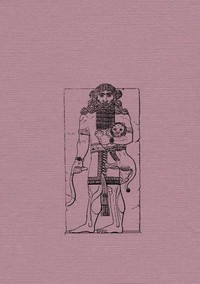
In Chapter XIV it is possible that “change” should read “chain” in 32. thou didst strike him; to a pillar thou didst change him, Italics are represented thus _italic_. THE CHALDEAN ACCOUNT OF GENESIS. [Illustration: Izdubar (Nimrod) in conflict with a lion] THE CHALDEAN ACCOUNT OF GENESIS CONTAINING THE DESCRIPTION OF THE CREATION, THE DELUGE, THE TOWER OF BABEL, THE DESTRUCTION OF SODOM, THE TIMES OF THE PATRIARCHS, AND NIMROD; BABYLONIAN FABLES, AND LEGENDS OF THE GODS; FROM THE CUNEIFORM INSCRIPTIONS. BY GEORGE SMITH, FORMERLY OF THE DEPARTMENT OF ORIENTAL ANTIQUITIES, BRITISH MUSEUM, AUTHOR OF “HISTORY OF ASSURBANIPAL,” “ASSYRIAN DISCOVERIES,” ETC. ETC. A NEW EDITION, THOROUGHLY REVISED AND CORRECTED (WITH ADDITIONS), BY A. H. SAYCE, DEPUTY-PROFESSOR OF COMPARATIVE PHILOLOGY IN THE UNIVERSITY OF OXFORD. _WITH ILLUSTRATIONS._ NEW YORK: CHARLES SCRIBNER’S SONS 743 AND 745 BROADWAY. PREFACE BY THE EDITOR. It is now five years since the present volume was first laid before the public by Mr. George Smith, just before setting out on his last ill-fated expedition to the East. It naturally awakened extreme interest and curiosity. The earlier chapters of Genesis no longer stood alone. Parallel accounts had been discovered by the author among the clay records of ancient Babylonia, which far exceeded in antiquity the venerable histories of the Bible. All those who had a theory to support, or a tradition to overthrow, turned eagerly to the newly-discovered documents, which possessed an equal interest for the students of history, of religion, and of language. The five years that have elapsed since the publication of “The Chaldean Account of Genesis” have been five years of active work and progress among Assyrian scholars. The impulse given to Assyrian research by Mr. Smith has survived his death; numberless new tablets and fragments of tablets have been brought to Europe from Assyria and Babylonia; fresh students of the inscriptions have risen up in this country and on the continent, more especially in Germany; and the scientific spirit which has been introduced into the study of the Assyrian language has immeasurably increased our knowledge of it. Thanks to the labours of men like Oppert, Lenormant and Guyard in France, or of Schrader, Delitzsch, Haupt and Hommel in Germany, texts which were obscure and doubtful at the time of Mr. Smith’s death have now become almost as clear as a page of the more difficult portions of the Old Testament. The Assyrian student, moreover, has an advantage which the Hebrew student has not; he possesses dictionaries and vocabularies compiled by the Assyro-Babylonians themselves, and these frequently throw light on a word which otherwise would be a “hapax legomenon.” The more backward condition of our knowledge of Assyrian, however, was not the only difficulty against which Mr. Smith had to contend. He was pressed for time when writing the present volume, which had to be finished before his departure for the East. The class of texts, also, which he had brought to light was a new class hitherto unknown, or almost unknown, to the Assyrian decipherer. He had to break fresh ground in dealing with them. Their style differed considerably from that of the texts previously studied; they had a vocabulary of their own, allusions of their own, and even, it may be added, a grammar of their own. If the texts had been complete the difficulty perhaps would not have been so great; but it was enormously increased by their mutilated condition. The skill and success with which Mr. Smith struggled against all these difficulties show more plainly than ever what a loss Assyrian research has sustained in him. Nevertheless, even the genius of...

This is a limited preview. Download the book to read the full content.

Let's be clear: this isn't a novel. It's a report from one of the most exciting archaeological discoveries of the 19th century. George Smith, a self-taught expert in Assyrian artifacts, was the man who put the pieces together.

The Story

The 'story' here has two layers. First, there's the ancient narrative Smith uncovered from shattered clay tablets. He found a Babylonian epic that includes a garden of the gods, the creation of man from clay mixed with blood, and a massive, world-destroying flood ordered by the gods. A hero is warned, builds a huge boat, saves his family and animals, and sends out birds to find land. Sound familiar? That was the shocker.

The second layer is Smith's own story. The book is his first-hand account of finding these tablets in the museum's collection, the painstaking work of translation, and the stunning moment of realization. He describes presenting his findings to a learned society, causing a literal sensation, and the newspaper headlines that followed. The plot is the unraveling of a historical mystery that connected Victorian England directly to ancient Mesopotamia.

Why You Should Read It

You should read this to feel the thrill of discovery right alongside Smith. His excitement is contagious. He isn't a dry academic; he's a guy who found something amazing and can't wait to tell you about it. The themes are huge—how stories travel and change over millennia, what different cultures share in their foundational myths, and the sheer human drive to understand our past. Reading it, you get a front-row seat to the moment a huge piece of human cultural history clicked into place. It makes you realize that these ancient stories were part of a living, breathing conversation across civilizations long before our modern labels for them existed.

Final Verdict

Perfect for history buffs who like a personal narrative, fans of real-life detective work, or anyone curious about where some of the world's most enduring stories might have started. It's not a light beach read, but it's surprisingly accessible. If you've ever read the Biblical book of Genesis and thought, 'I wonder where these ideas came from,' this is your origin story. Just be prepared to look at a few old clay tablet drawings—they're the star evidence.


✅ Copyright Free

There are no legal restrictions on this material. Access is open to everyone around the world.

Brian Jackson
1 year ago

Based on the summary, I decided to read it and it challenges the reader's perspective in an intellectual way. I couldn't put it down.

4.5
4.5 out of 5 (6 User reviews )

Add a Review

Your Rating *
There are no comments for this eBook.
You must log in to post a comment.
Log in


Related eBooks