1


Personal Narrative of Travels to the Equinoctial Regions of America, During the Year 1799-1804 — Volume 3 — Key Ideas to Explore
(0 User reviews)
902
Project Gutenberg
2005
Not confirmed
South America -- Description and travel; Natural history -- South America; Scientific expeditions
Readers of public-domain and historical texts
Project Gutenberg digital edition
en
Edition facts
Words
174,377
Reading time
759 min
Text sections
14
This digital edition of Personal Narrative of Travels to the Equinoctial Regions of America, During the Year 1799-1804 — Volume 3 — Key Ideas to Explore is described by source-level measurements including 174,377 words, 12 hr 39 min estimated reading time, and 14 detected text sections.
The text analysis averages about 25.4 words per sentence, while the detected sections provide another way to judge how the source is divided.
Project Gutenberg metadata also associates the work with “South America -- Description and travel,” connecting these edition facts with the source record’s subject description.
Source:
Project Gutenberg record #7254
Humboldt's third volume moves from Spanish Guiana to Cuba, blending precise natural history with a critical eye on colonial settlement, abandoned towns, and the slave trade, all anchored by his characteristic footnoted digressions.
Read the complete public-domain text at its original source.
Read on Project GutenbergThis third volume of Humboldt's Personal Narrative opens with a striking shift in scale: from the intimate observations of palm-inhabiting tribes in Spanish Guiana to a sweeping political essay on the island of Cuba. The structure mirrors Humboldt's method—alternating between dense natural description and broad historical analysis, often within the same chapter. A recurring pattern is his use of footnotes to layer contradictory sources, as when he collates testimonies on the founding dates of Darien towns, revealing how early colonial records themselves are unreliable. The reader is thus drawn into a narrative that is as much about the difficulty of knowing the New World as about describing it.
Ruins and Retrogression
Humboldt repeatedly returns to the theme of abandoned settlements. In the chapter on Spanish Guiana, he notes that towns founded by the Conquistadors—such as Antigua del Darien and San Sebastian de Uraba—have "retrograded into barbarism." He describes how "some ruins scattered on the hills of Uraba, the fruit-trees of Europe mixed with native trees" are all that remain. This image of European cultivation overtaken by native vegetation becomes a quiet motif. Humboldt does not simply record decay; he uses it to question the permanence of colonial enterprise. The same pattern appears in his account of New Cadiz, once the center of pearl-fishery, now uninhabited. These observations are not nostalgic but analytical: they point to the fragility of human settlement in regions where geography and history resist easy conquest.
The Footnote as a Second Narrative
One of the most distinctive structural features of this volume is Humboldt's extensive use of footnotes. They are not mere citations but miniature essays. For example, in a long note on the foundation of Darien towns, he cross-examines the historians Pedro de Cieca and Herrera, pointing out contradictions in their chronologies. He writes that "some contradictions are observed in the periods assigned to the foundation of the towns of Darien." This forensic approach turns the footnote into a space for methodological reflection. The reader is invited to see how knowledge is constructed—and how often it rests on shaky ground. Humboldt's voice in these notes is more skeptical and precise than in the main text, creating a layered reading experience where the official narrative is constantly undercut by scholarly doubt.
Geographical Illusions and the Veil of Discovery
Humboldt is acutely aware of how early explorers' expectations shaped their perceptions. He speaks of "geographical illusions, this mysterious veil, which enveloped the first discoveries" and magnified every object. This phrase captures a central tension in the narrative: the desire to see clearly versus the tendency to project myth onto unknown lands. The legend of El Dorado and the Laguna Parime are treated not as mere fables but as products of a specific historical moment. Humboldt traces how these stories influenced exploration and settlement, even as they led to disappointment. His method is to demystify without condescension, showing how the same impulse that drove Balboa to discover the South Sea also produced the mirage of a golden city. The reader is left to ponder how much of our own geographical knowledge might be similarly veiled.
Movement Between Scenes: From River to City
The volume's geography is organized around movement: from the interior rivers of Guiana to the coast of Venezuela, then across the sea to Cuba. Each transition is marked by a shift in tone. The chapters on the Llanos del Pao and the missions of the Caribs are dense with botanical and ethnographic detail, while the later chapters on Cuba become political essays on population, trade, and slavery. Humboldt does not smooth over these jumps; he lets the reader feel the change of pace. In the passage from Trinidad de Cuba to Rio Sinu, the narrative accelerates, covering vast distances in a few paragraphs. This uneven rhythm mirrors the actual experience of travel—long stretches of observation punctuated by rapid transits. The effect is to make the reader aware of the effort required to move through these landscapes, both physically and intellectually.
Readers approaching this volume should be prepared for a work that resists easy categorization. It is part travelogue, part scientific treatise, part political commentary. Humboldt's habit of interrupting his own narrative with footnotes and digressions can be disorienting, but it rewards patience. Pay attention to the moments when he pauses to question a source or note a contradiction—these are where the book's deepest insights lie. The volume is best read not as a linear story but as a series of interlocking investigations, each shedding light on the others.
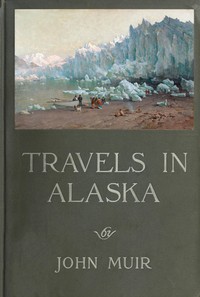
That rainy afternoon, Humboldt’s footnotes on Cuba’s abandoned sugar mills led me somewhere quieter—not further into his catalogs of barometers and palm trees, but to the sheer, untamed green of Travels in Alaska — Themes and Context. Both books carry that ache for wildness slipping through the cracks of human plans, though one is heat-broken and the other, frozen.
There are no reviews for this eBook.
There are no comments for this eBook.
Reader reflection
Before you leave, reflect on the book
Use these questions to collect your thoughts before moving on.
Your progress
0
/
10
2
What was your overall reaction to the book?
3
Is this a title you would suggest to others?
4
How much effort did this book require?
5
Do you expect to return to this book?
6
Would this book work well in a reading group?
7
Was the book what you thought it would be?
8
How distinctive were its ideas or approach?
9
Which lesson or insight stayed with you?
10