1

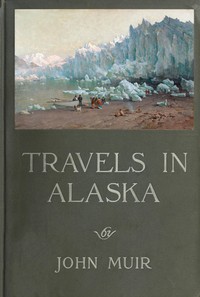
Travels in Alaska — Themes and Context
(0 User reviews)
704
Project Gutenberg
2005
Not confirmed
Alaska -- Description and travel; Naturalists -- United States -- Biography; Muir, John, 1838-1914 -- Travel -- Alaska; Conservationists -- United States -- Biography
Readers of public-domain and historical texts
Project Gutenberg digital edition
en
Edition facts
Words
89,027
Reading time
388 min
Text sections
22
For Travels in Alaska — Themes and Context, the stored edition analysis reports 89,027 words, 6 hr 28 min estimated reading time, and 22 detected text sections.
The text analysis averages about 27.4 words per sentence, while the detected sections provide another way to judge how the source is divided.
Project Gutenberg metadata also associates the work with “Alaska -- Description and travel,” connecting these edition facts with the source record’s subject description.
Source:
Project Gutenberg record #7345
John Muir's firsthand account of three Alaskan expeditions (1879, 1880, 1890) blends precise glacial observation, encounters with Tlingit communities, and vivid descriptions of the region's landscapes, structured as a travel narrative that moves between scientific scrutiny and cultural exchange.
Read the complete public-domain text at its original source.
Read on Project GutenbergJohn Muir's Travels in Alaska opens not with a grand landscape but with a confession: 'I am hopelessly and forever a mountaineer.' This personal declaration sets the tone for a narrative that moves between intimate observation and expansive description. The book is structured as three separate trips—1879, 1880, and 1890—each with its own rhythm of travel by canoe, steamer, and on foot. Muir's eye is drawn to glacial ice, the 'glacial writing' he reads in dreams, but also to the human encounters that punctuate his journey, such as the whiskey-making chief whose 'luck board' bears a curious inscription. The text shifts between scientific detail and cultural commentary, often within the same paragraph, creating a layered account of Alaska's landscapes and peoples.
Glacial Eyes and the Language of Ice
Muir's prose is most precise when describing glaciers. He speaks of 'blurred sheets of glacial writing' and 'lines of cleavage,' treating ice as a text to be deciphered. In the excerpts, he notes the 'fine growth of yellow cedar' alongside measurements of tree height, but his attention repeatedly returns to the movement and form of glaciers. The structure of the book mirrors this focus: the 1890 trip includes a dedicated 'Sled-Trip on the Muir Glacier,' suggesting a progression from coastal observation to direct engagement with the ice. Muir's language is technical yet vivid; he describes 'stranded icebergs' and 'ice cliffs' without anthropomorphizing them, maintaining a naturalist's detachment even as he conveys wonder.
Encounters at the Edge of the Map
The narrative frequently pauses for extended scenes of cultural contact. In one excerpt, Muir recounts a visit to a Tlingit village where the chief's household is 'busily engaged in making whiskey.' The passage is remarkable for its ethnographic detail: the 'luck board' nailed over the door, the chief's evasive replies about the still, and the children 'circled around the fire' with 'curious, intelligent' gazes. Muir does not romanticize or condemn; he notes the chief's 'grave deliberation' and the 'good behavior' of the listeners. These episodes are woven into the travel chronology, not segregated into a separate section, suggesting that for Muir, human geography is inseparable from physical geography.
Movement Between Scenes: Canoe, Steamer, and Trail
The book's structure is driven by movement. Chapter titles such as 'A Cruise in the Cassiar' and 'The Cassiar Trail' indicate a journey that alternates between water and land. Muir's descriptions of travel are precise: he notes wind and tide conditions, distances made good, and the labor of paddling. In one passage, he writes of making 'about ten miles by two or three o’clock' before the tide turned against them. This attention to the mechanics of travel gives the narrative a documentary quality. The three trips are separated by years, but the continuity of Muir's voice—his 'glacial eyes'—unifies them, creating a sense of ongoing exploration rather than discrete expeditions.
Recurring Images: Firelight, Totems, and the Sea
Certain images recur across the excerpts. Firelight appears in the village scene, where a 'little daughter of the chief with the glow of the firelight on her eyes' is described alongside a child who 'might have passed for one of Raphael’s angels.' Totem poles are mentioned in the list of illustrations, and the 'old chief and totem pole' at Wrangell suggests a visual motif. The sea is ever-present: 'stranded icebergs,' 'floating iceberg,' and the constant reference to tides and currents. These recurring elements create a sensory texture that anchors the reader in a specific place and time, even as Muir's scientific observations reach for universal patterns.
Readers approaching Travels in Alaska will find a work that rewards attention to its structure. The three-trip format allows Muir to revisit locations and refine his observations, while the interludes of cultural encounter complicate any simple narrative of wilderness exploration. Pay particular attention to the transitions between chapters—the moments when Muir shifts from describing a glacier to recounting a conversation with a chief—for it is in these juxtapositions that the book's distinctive voice emerges.
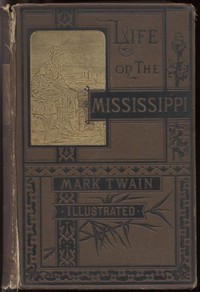
When I hold Muir’s Travels in Alaska, I feel the same patient wonder that fills my old copy of Life on the Mississippi, Part 1. — Background and Themes. Both men watched rivers of ice and water shape the land, and both listened—truly listened—to the people living along those moving paths. There is a quiet kinship there, a shared respect for forces far older than us.
There are no reviews for this eBook.
There are no comments for this eBook.
Reader reflection
What was your reading experience?
Capture what you thought, learned, and would like to remember.
Your progress
0
/
10
2
Did this book hold your interest?
3
Is this a title you would suggest to others?
4
What was the reading difficulty like?
5
How useful were the ideas in this book?
6
How personally connected did you feel to the book?
7
Which part made the strongest impression?
8
How original did the book feel?
9
What changed or sharpened your thinking?
10