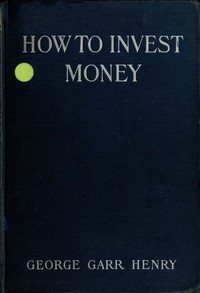
How to Invest Money by George Garr Henry
Read "How to Invest Money by George Garr Henry" Online
This book is available in the public domain. Start reading the digital edition below.
START READING FULL BOOKBook Preview
A short preview of the book’s content is shown below to give you an idea of its style and themes.
Published in 1919, this slim book is George Garr Henry's direct attempt to talk sense into the everyday investor. Forget complex charts; this is a plainspoken conversation about principles.
The Story
There isn't a plot in the traditional sense. Instead, Henry sets up a debate. On one side is the cautious, long-term investor he wants you to be. On the other is the impulsive speculator he knows you're tempted to become. He walks through the basics of bonds, stocks, and real estate, but the real drama is in his warnings. He describes the traps of following hot tips, the danger of investing in things you don't understand, and the importance of staying calm when markets get wild. The 'story' is his persistent effort to guide the reader away from folly and toward security.
Why You Should Read It
This book's power comes from its startling relevance. When Henry scolds readers for trying to 'get rich quick' or for selling in a panic, you could swap '1919' for '2023' and it would still be true. It's a humbling and oddly comforting reminder that human nature is the constant in finance. His voice is firm but fair, like a no-nonsense uncle who's seen it all. Reading his advice—focus on income, diversify, invest regularly, ignore the noise—feels like uncovering the original source code for modern sensible investing. It strips away decades of financial jargon and gets back to the core ideas that actually work.
Final Verdict
This is a perfect little book for anyone curious about money, history, or human psychology. It's especially great for new investors feeling overwhelmed by today's information overload. Henry cuts through the clutter with timeless wisdom. History buffs will love the period details (his examples include railroad bonds and 'war savings' stamps). If you enjoy books like The Psychology of Money, you'll appreciate seeing these ideas in their original, straightforward form. Just be ready for some dated references—it's part of the charm. Think of it less as an outdated manual and more as a classic lesson in common sense.
You are viewing a work that belongs to the global public domain. It is available for public use and education.