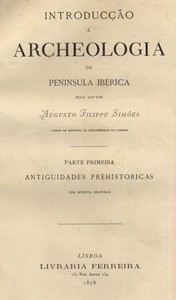
Introdução á archeologia da peninsula Iberica by Augusto Filipe Simões

(5 User reviews)   3403
By Rebecca King Posted on Jan 13, 2026
In Category - World Religions
Simões, Augusto Filipe, 1835-1884 Simões, Augusto Filipe, 1835-1884
Portuguese
Hey, have you ever looked at the Iberian Peninsula—Spain and Portugal—and wondered what stories are literally buried under your feet? That's exactly the itch Augusto Filipe Simões set out to scratch back in the 19th century. This isn't just a dry catalog of old pots and stones. It's a detective story from a time before modern archaeology existed. Simões was one of the first people to systematically ask: Who lived here before the Romans? Before written history? He pieces together clues from prehistoric tombs, mysterious carvings, and ancient metalwork to try and answer that huge question. Reading this book feels like looking over the shoulder of a brilliant, curious mind as he tries to connect the dots across thousands of years, using only the physical fragments left behind. It's the origin story of Iberian archaeology itself, written with the passion of a true pioneer who wanted everyone to understand the deep roots of their homeland.
Share

Read "Introdução á archeologia da peninsula Iberica by Augusto Filipe Simões" Online

This book is available in the public domain. Start reading the digital edition below.

START READING FULL BOOK
Instant Access    Mobile Friendly

Book Preview

A short preview of the book’s content is shown below to give you an idea of its style and themes.

inteiramente de opiniões antecipadas e de systemas preconcebidos. O historiador principia pelo mais antigo dos factos que a tradição refere, e deduz depois chronologicamente todos os outros até chegar á actualidade. O geologo segue o caminho inverso; começa pelos factos contemporaneos e, induzindo do conhecido para o desconhecido, interpretando pelo presente o passado, remonta-se, de vestigio em vestigio, até á origem da terra. Ninguem lhe contou, ninguem deixou escripta a historia do planeta que habitamos. É elle quem a cria, quem a inventa, observando e interpretando os vestigios materiaes dos factos que lhe revelam na sua evolução incessante as phases principaes da vida do globo. Os documentos que a natureza offerece ao naturalista não exprimem senão a verdade rigorosa e exacta. Os documentos que o historiador aprecia, traçados por mãos humanas, muitas vezes a desfiguram e falseam. Mente o homem, a natureza não. As condições do archeologo que estuda as epocas prehistoricas são identicas ás do naturalista, e como naturalista ha de proceder se quizer chegar ao conhecimento da verdade. Em primeiro logar falta-lhe inteiramente a tradição verbal ou escripta; tem de cingir-se á significação exacta e rigorosa dos vestigios que observa. Em segundo logar a qualidade d’estes vestigios, o modo como se encontram nas camadas superficiaes da crusta da terra, os restos fosseis que lhes andam associados, fazem da archeologia prehistorica uma como parte da paleontologia humana. Aqui pois desapparece de todo a differença entre o archeologo e o naturalista. Na archeologia dos tempos historicos, com quanto se considerem já os factos á luz da historia, subsiste todavia, como elemento essencial da interpretação d’elles, a analyse dos monumentos, a apreciação dos productos da arte, correspondentes em cada seculo aos fosseis ou aos outros vestigios em que o geologo, á força de observar e comparar, chega a constituir e a lêr a historia da terra. O historiador não póde pois deixar de ser archeologo; tem de aproveitar-se das luzes que a archeologia lhe presta; e não raras vezes acontece indicarem-lhe os monumentos a verdade alterada pela tradição. Não ha muitos annos, por exemplo, que a historia nos representava os wisigodos como gente que não chegara a cultivar as artes. As descobertas de alguns capiteis em Toledo e do thesouro de Guarrazar corrigiram a falsidade historica, mostrando-nos até que ponto elles se elevaram na esculptura da pedra e dos metaes, e tambem na architectura, porque de certo não fabricariam esplendidas coroas votivas de ouro e de pedras preciosas, nem esculpiriam delicados capiteis para templos de pedra e barro ou de madeira, como diziam terem sido em Hespanha os dos successores dos romanos na dominação da Peninsula. Quem considerar portanto a archeologia a esta luz, como poderoso elemento de critica para o historiador, e como a principal das vias por onde os methodos e noções das sciencias da natureza passam para as sciencias historicas e sociaes, necessariamente concluirá ser o seu estudo uma necessidade impreterivel para qualquer povo que não queira ficar estacionario ou retardado áquem d’aquelles que o facho da sciencia allumia na vanguarda da civilisação. Sobe de ponto a necessidade em Portugal, de quem o poeta diria ainda hoje, como ha tres seculos: E não sei por que influxo do destino Não tem um ledo orgulho e geral gosto, Que os animos levanta de contino A ter para trabalhos ledo o rosto. A superioridade relativa da Hespanha em comprehender e apreciar os estudos archeologicos claramente se nos patentêa em publicações de tal interesse e magnitude, quaes são os _Monumentos arquitetonicos_ e o _Museo español de antigüedades_; e em monographias como aquellas que das suas respectivas provincias escreveram os srs. Villa-amil,...

This is a limited preview. Download the book to read the full content.

Let's be clear from the start: this is not a novel. There's no fictional plot. But the story it tells is incredibly compelling. Introdução á archeologia da peninsula Iberica is the story of a quest for origins. In the mid-1800s, Augusto Filipe Simões, a Portuguese intellectual, looked at his country and its neighbor and saw a history that was poorly understood. Everyone knew about the Romans and the Moors, but what about the people who were there first? The ones who left behind dolmens (giant stone tombs), strange statues, and beautifully crafted gold torques? Simões made it his mission to gather all the scattered knowledge about these prehistoric finds and try to make sense of them.

The Story

Think of the book as a foundational map. Simões acts as your guide, walking you through the different types of archaeological evidence found across Portugal and Spain. He talks about the different ages—Stone, Bronze, Iron—and what life might have been like in each. He describes the artifacts, from simple flint tools to intricate Celtic jewelry, and discusses what they tell us about trade, war, art, and belief. The central thread is his attempt to organize this chaotic puzzle, to create a timeline and a cultural framework for the Iberian Peninsula's earliest inhabitants, long before Portugal or Spain were even ideas.

Why You Should Read It

You should read it for the sense of discovery. This isn't a sterile, modern textbook. You can feel Simões's excitement and national pride on every page. He wasn't just studying old things; he was helping to build a nation's identity by uncovering its deepest past. His writing has a tangible urgency—a need to document and preserve this heritage before it was lost. Reading it gives you a unique window into how history and archaeology were done in their infancy. You see the mistakes, the brilliant guesses, and the sheer dedication required when you have no carbon dating or satellite imagery, just your eyes, your mind, and a deep love for the subject.

Final Verdict

This book is a perfect fit for a very specific reader: the history lover who enjoys seeing how a field of study began. It's for anyone traveling to Portugal or Spain who wants to understand the ancient ancient layers of the land. If you're fascinated by the process of how we know what we know about the past, Simões's work is a captivating primary source. It's not a light read, but it's a profoundly rewarding one. You'll come away with a new appreciation for every standing stone and museum artifact, knowing the story of the person who helped argue for their importance in the first place.


🟢 Usage Rights

This masterpiece is free from copyright limitations. Share knowledge freely with the world.

Jennifer Anderson
1 year ago

This is one of those stories where the pacing is just right, keeping you engaged. A true masterpiece.

Sandra Miller
5 months ago

Having read this twice, the clarity of the writing makes this accessible. A valuable addition to my collection.

Sarah Lopez
4 months ago

Comprehensive and well-researched.

George Thompson
1 year ago

After hearing about this author multiple times, the storytelling feels authentic and emotionally grounded. This story will stay with me.

Andrew Lewis
1 year ago

From the very first page, the clarity of the writing makes this accessible. This story will stay with me.
5
5 out of 5 (5 User reviews )

Add a Review

Your Rating *
There are no comments for this eBook.
You must log in to post a comment.
Log in


Related eBooks