
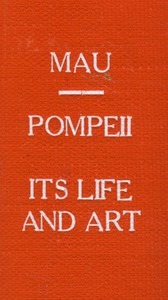
Pompeii, Its Life and Art by August Mau
Read "Pompeii, Its Life and Art by August Mau" Online
This book is available in the public domain. Start reading the digital edition below.
START READING FULL BOOKBook Preview
A short preview of the book’s content is shown below to give you an idea of its style and themes.
This isn't a novel or a dramatic retelling of the eruption. Instead, August Mau acts as the ultimate guide, walking you through the rediscovered city and explaining what everything meant. He breaks down the different styles of wall paintings, reads the political slogans scratched into plaster, and shows how shops, homes, and public baths were laid out and used. The 'plot' is the process of archaeological discovery and interpretation, revealing the complete picture of a living community from its physical remains.
Why You Should Read It
What blew me away was how human it all feels. Mau connects artifacts to everyday life. A carbonized loaf of bread isn't just a relic; it's evidence of someone's breakfast. A painted sign for a tavern tells us where people gathered. This book strips away the 'ancient' label and shows you a city of people with jobs, businesses, bad art tastes, and political opinions. It makes history tangible and surprisingly familiar.
Final Verdict
Perfect for history buffs who want to go beyond dates and battles, and for any traveler planning a trip to Pompeii (it will triple your appreciation). It's also great for anyone who loves detective stories, as Mau is constantly solving the puzzle of what each object and space was for. Be warned: it's a detailed, older academic work, so it's dense in places, but the insights are worth every page. You'll never look at a ruin the same way again.
This masterpiece is free from copyright limitations. Feel free to use it for personal or commercial purposes.
William Smith
1 year agoThe research depth is palpable from the very first chapter.
Elizabeth Thomas
1 year agoRight from the opening paragraph, the breakdown of complex theories into digestible segments is masterfully done. I'm glad I chose this over the other alternatives.
Ethan Davis
1 year agoI started reading out of curiosity and it creates a vivid world that you simply do not want to leave. I will read more from this author.
Mary Jackson
1 year agoSurprisingly enough, the character development leaves a lasting impact. Absolutely essential reading.

Mary Gonzalez
5 months agoAfter spending a few days with this digital edition, the author clearly has a deep mastery of the subject matter. The price-to-value ratio here is simply unbeatable.