1

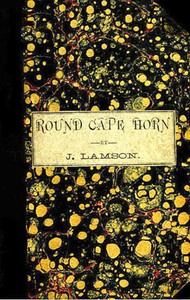
Round Cape Horn Voyage of the Passenger-Ship James W. Paige, from Maine to California in the Year 1852 — Background and Themes
1
0
Project Gutenberg
2013
California -- Social life and customs; Voyages and travels; Voyages to the Pacific coast; Lamson, J. (Joseph) -- Travel; James W. Paige (Ship)
Readers of public-domain and historical texts
Project Gutenberg digital edition
en
Edition facts
Words: 48,492
Reading time: 211 min
Text sections: 6
Source:
Project Gutenberg record #43342
J. Lamson's 1878 account of an 1852 voyage from Maine to California via Cape Horn, based on his journal. The narrative blends travelogue with shipboard disputes, port descriptions, and early California scenes, offering a passenger's view of a route soon made obsolete by railroads.
J. Lamson's Round Cape Horn is a first-person narrative of a five-month voyage from Maine to California in 1852 aboard the passenger-ship James W. Paige. Published in 1878, the book draws on a journal kept during the passage and is framed by the author's awareness that the Cape Horn route was already being superseded by transcontinental railroads and steamships. The preface explicitly positions the work as a record of a vanishing experience, noting that the voyage's perils and discomforts had become unnecessary for reaching California.
The catalog subjects classify the book under Geography and California social life and customs, but the excerpts reveal a text more concerned with the daily realities of shipboard life—quarrels, theft, bad cooking, and the search for fresh provisions—than with systematic geographic description. Lamson's account is episodic, mixing port descriptions with interpersonal conflicts among passengers and crew.
Shipboard Society and Conflict
The excerpts show that the voyage was marked by persistent social friction. Lamson records a formal meeting in the main cabin where a Mr. Johnson attempted to justify his quarrels with a Miss Julia S., with the captain joining the discussion but failing to restore harmony. A separate incident involves a theft of about a hundred cakes of soft-tack from the cooks' galley, leading the captain to threaten a return to hard-tack and culminating in a physical altercation when he seized a passenger by the collar. These episodes suggest that the passenger-ship functioned as a small, tense community where authority was contested and grievances aired publicly.
Lamson's tone is matter-of-fact; he reports these events without moralizing, noting that the meeting produced no change in anyone's opinion. The narrative does not resolve these conflicts, leaving the reader to infer the ongoing strain of a long voyage in confined quarters.
Port Encounters and Personal Drama
Lamson's account of stops at Talcahuano, Chile, includes a poignant personal story. Passenger Stephen Pierce, hoping to find his brother after four years without word, learns upon arrival that his brother had died fourteen months earlier. Pierce meets the widow—a young Chilean woman of eighteen—and the two share an emotional meeting at the gravesite. Lamson describes the scene with restraint, noting that the widow's mother and relatives showed the travelers kindness, and that Pierce's departure was likely a final farewell.
This episode stands in contrast to the shipboard conflicts, illustrating the human dimensions of travel that the catalog subject "Voyages and travels" only hints at. Lamson also records practical disappointments: the fruit market in Talcahuano offered only poor apples and walnuts, a detail that grounds the narrative in the material realities of provisioning.
The Author's Framing and Purpose
Lamson's preface explicitly states his intention to provide a truthful account of the voyage's perils, discomforts, and pleasures. He also notes that the scenes and anecdotes recorded at the end of the voyage are meant to convey an idea—"a vague and indistinct one, perhaps"—of early California's characteristics and habits. This self-deprecating qualification suggests that the author was aware of the limitations of his perspective, having spent only a limited time in California itself.
The catalog subject "California -- Social life and customs" is thus only partially addressed by the excerpts; the bulk of the narrative concerns the voyage itself. Lamson's book is less a systematic study of California than a personal record of a journey that happened to end there. The reader should expect a diary-like structure, with entries organized by date and focused on immediate events rather than broader analysis.
Readers approaching Round Cape Horn should treat it as a primary source for mid-nineteenth-century passenger-ship travel, not as a comprehensive guide to California. The narrative's value lies in its unvarnished depiction of shipboard life—the petty disputes, the search for fresh food, the emotional encounters in foreign ports—rather than in any grand geographical or historical thesis. Lamson's voice is that of an observant but not particularly literary traveler, and his book rewards those interested in the mundane textures of a voyage that, even as he wrote, was becoming a thing of the past.
Reader reflection
How did this book work for you?
Your answers remain private and are stored only in this browser.
Your progress
0
/
10
2
What was your overall reaction to the book?
3
Is this a title you would suggest to others?
4
What was the reading difficulty like?
5
How useful were the ideas in this book?
6
Was the book moving at the right speed?
7
Did the book offer a fresh perspective?
8
Was the book easy to understand?
9
In one sentence, what did you learn?
10