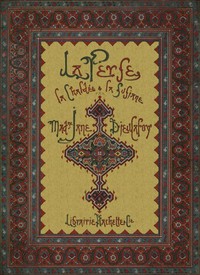
La Perse, la Chaldée et la Susiane by Jane Dieulafoy

(8 User reviews)   2870
Dieulafoy, Jane, 1851-1916 Dieulafoy, Jane, 1851-1916
French
Have you ever wondered what it would be like to travel back in time to the dusty, sun-baked ruins of ancient Persia? In 1881, Jane Dieulafoy did exactly that. She wasn't a typical tourist. She was a French archaeologist who cut her hair short, dressed as a man, and traveled with her husband on a dangerous mission. Their goal? To uncover the lost glories of the Persian Empire. This book is her diary. It’s not just about old stones. It’s a wild adventure story. Imagine dodging bandits, negotiating with suspicious local rulers, and camping in the shadow of crumbling palaces that hadn't been seen by Europeans in centuries. The real mystery isn't just what they found buried in the sand. It’s how Jane managed to pull this off in a time when women were barely allowed to leave their parlors. She gives us a front-row seat to history being dug up, piece by thrilling piece.
Share

Read "La Perse, la Chaldée et la Susiane by Jane Dieulafoy" Online

This book is available in the public domain. Start reading the digital edition below.

START READING FULL BOOK
Instant Access    Mobile Friendly

Book Preview

A short preview of the book’s content is shown below to give you an idea of its style and themes.

pas manqué d'entretenir le savant archéologue du résultat de ses études. Les encouragements du maître mirent un terme à toute hésitation. Mon mari demanda à quitter un important service de construction de chemin de fer dont il était chargé à titre d'ingénieur des ponts et chaussées. Cette autorisation obtenue, nous nous mîmes en mesure de prendre au plus vite la route de l'empire des grands rois. Tout chemin ne conduit pas en Perse. Les augures consultés furent d'avis différents. Deux voies étaient ouvertes ou, pour mieux dire, fermées. L'une traversait le Caucase, passait au pied de l'Ararat et desservait la grande ville de Tauris; nos agents diplomatiques la parcouraient assez souvent pour qu'elle fût bien connue au ministère des Affaires étrangères. Mais le pays était en pleine insurrection, les Kurdes sauvages mettaient tout à feu et à sang et dépouillaient ou massacraient impitoyablement les voyageurs. Le second itinéraire, par Port-Saïd, la mer Rouge, l'océan Indien, conduisait, après une traversée de plus de quarante jours, à Bender-Bouchyr, petit port du golfe Persique. Là, paraît-il, on tombait aux mains d'un valy sauvage, à peu près indépendant de l'autorité du chah de Perse. Dans le sud comme dans le nord nous courions au-devant d'un désastre; le moins qu'il pût nous arriver était d'être hachés en menus morceaux. L'exagération évidente de ces prédictions fut cause que nous leur accordâmes médiocre créance. Mon mari ne s'occupait point d'anthropologie; il ne se sentait même pas appelé à aller dénicher dans des cimetières quelconques des crânes ou des ossements tout aussi quelconques dont les légitimes propriétaires n'avaient jamais sollicité la faveur de venir figurer dans nos muséums sous de pompeuses étiquettes. Dans ces conditions il n'avait point droit à émarger au budget des Missions et devait se contenter, pour tout viatique, d'une belle feuille de papier blanc sur laquelle un calligraphe de troisième ordre le recommandait aux bons soins de nos agents diplomatiques en Orient et priait les représentants du ministère des Affaires étrangères de lui faciliter une mission aussi intéressante que gratuite. Encore eut-il l'heureuse fortune d'inspirer confiance à M. de Ronchaud, alors secrétaire général au ministère des Beaux-Arts. Grâce à l'intervention et aux démarches bienveillantes de ce haut fonctionnaire, le fil à la patte qui retenait mon mari en France fut dénoué, et nous nous trouvâmes enfin libres, libres comme l'air, avec toute une année de liberté devant nous. Ces premières difficultés vaincues, quelques amis bien intentionnés tentèrent de me détourner d'une expédition, au demeurant fort hasardeuse, et m'engagèrent vivement à rester au logis. On fit miroiter à mes yeux les plaisirs les plus attrayants. Un jour je rangerais dans des armoires des lessives embaumées, j'inventerais des marmelades et des coulis nouveaux; le lendemain je dirigerais en souveraine la bataille contre les mouches, la chasse aux mites, le raccommodage des chaussettes. Deux fois par semaine j'irais me pavaner à la musique municipale. L'après-midi serait consacré aux sermons du prédicateur à la mode, aux offices de la cathédrale et à ces délicates conversations entre femmes où, après avoir égorgeaillé son prochain, on se délasse en causant toilettes, grossesses et nourrissages. Je sus résister à toutes ces tentations. A cette nouvelle on me traita d'_originale_, accusation bien grave en province; mes amis les meilleurs et les plus indulgents se contentèrent de douter du parfait équilibre de mon esprit. [Illustration: LE PARTHÉNON. (Voyez p. 5.)] L'heure approchait. De pieuses mains suspendirent à notre cou des scapulaires, des médailles les mieux bénies, des prières contre la mort; je fermai les malles et nous partîmes. Nous nous embarquâmes à Marseille et montâmes sur l'_Ava_, grand navire des Messageries maritimes habituellement...

This is a limited preview. Download the book to read the full content.

In 1881, Jane and Marcel Dieulafoy set off from France on an archaeological expedition that was equal parts science and sheer daring. Funded by the French government, their mission was to explore ancient sites in Persia (modern-day Iran), Chaldea, and Susiana. For nearly two years, they traveled by carriage, horseback, and foot across harsh, often lawless terrain.

The Story

This isn't a dry report. It's Jane's personal travelogue. She writes about the daily grind and sudden dangers of exploration. One day, they're carefully sketching the colossal stone bulls at the ruins of Persepolis. The next, they're bargaining for safe passage with a tribal chief or treating sick members of their caravan. The 'plot' is their quest: to document, measure, and ultimately excavate these forgotten capitals. A major part of the narrative revolves around their work at Susa, where they made significant discoveries. Jane describes the excitement of finding colorful glazed bricks and ancient inscriptions, pulling artifacts from the earth that had been silent for over two thousand years.

Why You Should Read It

Jane's voice is what makes this special. She's witty, sharply observant, and refreshingly blunt. She doesn't romanticize the 'Orient'; she shows you the bugs, the heat, the frustrating bureaucracy, and the incredible kindness of strangers. Her unique position—disguised as a man—gave her access to both male and female spaces, offering a rare, full-circle view of 19th-century Persian society. You're not just learning about ancient history; you're experiencing the adventure of making that history known. Her passion for the past is contagious, and her sheer determination in the face of constant obstacles is downright inspiring.

Final Verdict

Perfect for anyone who loves real-life adventure stories, armchair travel, or forgotten chapters of history. If you enjoy the spirit of Indiana Jones but prefer true stories with a smart, fearless protagonist, you'll be captivated by Jane Dieulafoy. It’s also a fascinating read for anyone interested in the early, messy, and thrilling days of archaeology, before it became a standardized science. This is history writing that feels alive, dusty boots and all.


ℹ️ No Rights Reserved

Legal analysis indicates this work is in the public domain. Enjoy reading and sharing without restrictions.

Jennifer Sanchez
1 year ago

If you enjoy this genre, it challenges the reader's perspective in an intellectual way. Absolutely essential reading.

Nancy Wright
1 year ago

I stumbled upon this title and the atmosphere created is totally immersive. I will read more from this author.

Lisa King
1 year ago

As someone who reads a lot, the author's voice is distinct and makes complex topics easy to digest. Absolutely essential reading.

5
5 out of 5 (8 User reviews )

Add a Review

Your Rating *
There are no comments for this eBook.
You must log in to post a comment.
Log in


Related eBooks