1

Great African Travellers: From Mungo Park to Livingstone and Stanley — Background and Themes
(0 User reviews)
326
Project Gutenberg
2007
Not confirmed
Africa -- Description and travel; Africa -- Discovery and exploration; Explorers
Readers of public-domain and historical texts
Project Gutenberg digital edition
en
Edition facts
Words
144,948
Reading time
631 min
Text sections
13
Before opening Great African Travellers: From Mungo Park to Livingstone and Stanley — Background and Themes, the edition data offers a quick orientation: 144,948 words, 10 hr 31 min estimated reading time, and 13 detected text sections.
The text analysis averages about 25.0 words per sentence, while the detected sections provide another way to judge how the source is divided.
Project Gutenberg metadata also associates the work with “Africa -- Description and travel,” connecting these edition facts with the source record’s subject description.
Source:
Project Gutenberg record #21391
This editorial note examines W.H.G. Kingston's narrative voice in 'Great African Travellers', focusing on how his prose shifts between sweeping historical overviews and granular ethnographic detail, and how pacing varies from rapid summary to immersive scene-setting.
Read the complete public-domain text at its original source.
Read on Project GutenbergW.H.G. Kingston opens his account of African exploration with a broad, almost mythic portrait of European ignorance: the interior of Africa was imagined as 'one howling wilderness of burning sand.' This sentence sets the tone for a work that oscillates between sweeping generalization and sudden, vivid particularity. The narrative voice is that of a Victorian compiler, confident in its judgments yet capable of pausing for ethnographic curiosity, as when describing the Weezee dance or Sultan Ukulima's fondness for pomba. The pacing mirrors the explorers' own rhythms: long stretches of summary punctuated by moments of close observation.
The Compiler's Voice and Its Shifts
Kingston writes as a synthesizer, not a participant. His opening chapter surveys the state of geographical knowledge under George III with a tone of retrospective superiority: 'they imagined,' 'they knew,' 'their ignorance was profound.' The repeated 'they' distances the reader from that earlier era. Yet when the narrative moves to specific encounters, the voice becomes more immediate. The description of the Weezee dance—'a long strip of bark or cow-skin is laid on the ground'—uses present tense and concrete detail, as if the scene were unfolding before the reader. This shift from abstract summary to ethnographic present marks a deliberate change in pace, from the rapid chronicle of expeditions to a slower, more immersive mode.
Pacing Through Anecdote and Detail
The excerpt featuring Speke and the enslaved man who pleads for freedom exemplifies how Kingston uses anecdote to alter tempo. The man's direct speech—'Oh, my lord, take pity on me!'—interrupts the forward march of the narrative with a moment of human drama. Kingston then returns to the broader context of Arab attacks and Hottentot sickness, but the pacing has been deliberately slowed. Similarly, the account of Sultan Ukulima's practical joke with quinine and pomba offers a comic pause. These embedded stories function as narrative rests, allowing the reader to absorb the texture of daily life in the regions traversed, rather than simply following the route.
Recurring Patterns in Description
Certain descriptive habits recur throughout the excerpts. Kingston frequently notes the material culture of the peoples encountered: pipes made from 'a lump of clay and a green twig,' tobacco twisted into 'a thick rope like a hay-band,' pomba brewed from grain cultivated by women. These details are not merely decorative; they anchor the narrative in tangible objects. The author also shows a consistent interest in social hierarchies and rituals—the chief who drinks more than anyone, the elders sitting apart, the women standing silent during dances. These patterns suggest a methodical eye for custom, even as the overarching narrative rushes from one explorer to the next.
Readers attentive to Kingston's prose will notice how he manages the tension between the grand arc of exploration and the small, telling detail. The book rewards those who read for its shifts in register—from the panoramic to the intimate, from the dismissive to the curious. Pay particular attention to the moments when the narrative pauses for a custom, a speech, or a joke; these are where the compiler's voice becomes most distinctive.
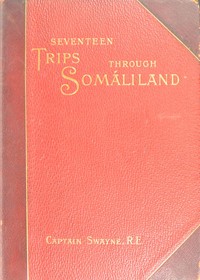
That rainy afternoon, Kingston’s shifting rhythm—grand sweeps of history falling suddenly into quiet, specific moments—felt like a window dimming with fog. I wanted that same intimacy, but smaller, closer. The next week, an old friend lent me Seventeen trips through Somáliland A record of exploration & big game shooting, 1885 to 1893 — A Closer Reading, and there it was again: the land’s vast silence, then a single footprint.
There are no reviews for this eBook.
There are no comments for this eBook.
Reader reflection
Record your reading impressions
A brief reflection can help important ideas stay with you longer.
Your progress
0
/
10
2
What was your overall reaction to the book?
3
Is this a title you would suggest to others?
4
What was the reading difficulty like?
5
What was the strongest part of the book?
6
What was its emotional impact?
7
Would this book work well in a reading group?
8
Is this a title worth rereading?
9
What changed or sharpened your thinking?
10