1

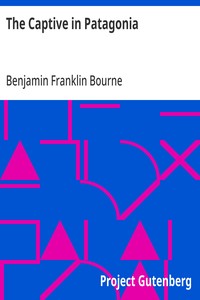
The Captive in Patagonia — Reading Notes
(0 User reviews)
551
Project Gutenberg
2011
Not confirmed
Indians of South America -- Patagonia (Argentina and Chile); Patagonia (Argentina and Chile) -- Description and travel; Bourne, Benjamin Franklin, 1816-1874; Tehuelche Indians -- Social life and customs; Indian captivities -- Argentina; Indian captivities -- Patagonia (Argentina and Chile)
Readers of public-domain and historical texts
Project Gutenberg digital edition
en
Edition facts
Words
64,615
Reading time
281 min
Text sections
6
Before opening The Captive in Patagonia — Reading Notes, the edition data offers a quick orientation: 64,615 words, 4 hr 41 min estimated reading time, and 6 detected text sections.
The text analysis averages about 25.1 words per sentence, while the detected sections provide another way to judge how the source is divided.
Project Gutenberg metadata also associates the work with “Indians of South America -- Patagonia (Argentina and Chile),” connecting these edition facts with the source record’s subject description.
Source:
Project Gutenberg record #38408
Bourne's 1853 narrative of captivity among Tehuelche people in Patagonia, based on his firsthand observations of their customs, landscape, and his own strategies for survival and escape.
Read the complete public-domain text at its original source.
Read on Project GutenbergBourne opens his narrative with a frank admission that book-making is not his trade, yet the interest of strangers in his fortunes compelled him to write. He promises a plain record of facts, not literary agility, and positions his account as a corrective to contradictory voyager reports about the so-called “giants” of South America. The preface establishes a tone of measured reliability: Bourne has “seen the elephant” and can measure its proboscis. The reader is thus primed for a personal narrative that values direct testimony over embellishment.
The first chapter plunges into action: a trading expedition in the Straits of Magellan, a sudden betrayal, and Bourne’s detention by a Patagonian tribe. He describes his initial captivity with dry humor and precise detail—the chief’s household, the wigwam, the diet—while noting his “indefinite residence” and the “natural reflections” that follow. The voice is that of a practical man thrown into an alien world, observing keenly and calculating his next move.
The Captive’s Voice: Self-Deprecation and Strategy
Bourne’s narrative voice is distinctive for its blend of self-deprecation and strategic cunning. When he loses his temper and shakes his fists at the tribe, he quickly recovers by feigning insanity—pointing to his head, beating it, and howling. The chief accepts the plea, but Bourne notes that “my feminine foes would not be convinced.” This episode reveals a narrator who is both vulnerable and resourceful, willing to play a role to survive. He later admits to the reader that his promises to help steal horses were insincere: “Was I insincere in all this? The reader may smile or may frown, but it was my purpose … to humor them to the top of their bent.” Such asides create an intimate, confiding tone, inviting the reader to share in his calculated deceptions.
Landscape and Movement: The River as a Thread
Bourne’s descriptions of the Patagonian landscape are spare but functional, often tied to movement and escape. The Santa Cruz River appears as a landmark and a source of hope—the Indians claim it leads to “Holland,” a destination Bourne doubts but cannot dismiss. He notes the river’s “deep and rapid” current, the “high abrupt sand-banks,” and the stunted underbrush. These details ground the narrative in a specific geography. The crossing of the river, with its improvised boats made of bushes and tent-stakes, is described with the eye of a participant: “Four Indians then raise the stakes from the …” The landscape is not romanticized; it is a stage for action, a barrier to be crossed, a route to be followed or blocked.
Ethnographic Observation: Customs and Credulity
Bourne intersperses his personal story with observations of Tehuelche life, though he frames them as limited by his perspective. He describes their gambling, culinary arts, and the division of the tribe, but he is careful to note when he is unsure: “Their lies about that same Dutch land had long since destroyed all faith in their words.” He reports their claim that they wanted him to help steal horses, but adds, “What on earth they wanted of me, unless to fat and eat me, was past conjecture.” This skepticism prevents the narrative from becoming a simple ethnographic report. Instead, Bourne presents what he saw and heard, leaving the reader to weigh the evidence. The catalog subjects list “Tehuelche Indians – Social life and customs,” and Bourne’s account does provide glimpses, but always filtered through his own captivity and uncertainty.
The Unreliable Promise: “Holland” and the Horizon of Escape
Throughout the excerpts, the promise of “Holland” recurs as a mirage. The Indians repeatedly tell Bourne that the river leads there, but he has learned not to trust them. This motif underscores the tension between hope and skepticism that drives the narrative. Bourne’s plan is to “keep an eye open for future opportunities,” and the reader follows his calculations: he tries to urge the tribe onward, but they are not to be hurried. The uncertainty of his fate—whether he will reach “Holland,” escape, or remain captive—gives the story its momentum. The reader, like Bourne, must wait and watch, parsing each clue for a sign of deliverance.
Bourne’s narrative rewards a reader who attends to small details: a gesture, a lie, a river’s name. The excerpts show a man who is both observer and actor, recording what he sees while maneuvering for survival. As you read, note how Bourne’s tone shifts between frankness and irony, and how his descriptions of the Patagonian landscape and people are always colored by his predicament. The full text may reveal whether his strategies succeed, but the journey itself—through sand-banks, wigwams, and dubious promises—is the heart of the account.
Bourne’s quiet catalog of Patagonian grasses and gunpowder made me think of my own grandfather’s yellowed field notes, kept for no one. That same patient, unhurried observation—of land and limits—came back to me in Travels Through North America, During the Years 1825 and 1826. v. 1-2 — Context and Discussion, where the prairies felt just as vast, just as quietly indifferent to a solitary walker.
There are no reviews for this eBook.
There are no comments for this eBook.
Reader reflection
What was your reading experience?
Capture what you thought, learned, and would like to remember.
Your progress
0
/
10
2
How did the book work for you overall?
3
Would you pass this book on to a friend?
4
How demanding did the text feel?
5
Was the book moving at the right speed?
6
Did you relate to its people, ideas, or situations?
7
How valuable was this book for your own interests?
8
How distinctive were its ideas or approach?
9
What changed or sharpened your thinking?
10