1

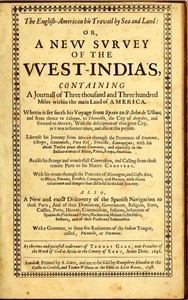
The English-American, His Travail by Sea and Land: or, A New Survey of the West-India's — Reading Companion
(0 User reviews)
1096
Project Gutenberg
2017
Not confirmed
Mexico -- Description and travel; Central America -- Description and travel; Catholic Church -- Missions; Missions -- Latin America; Pokonchi language -- Grammar
Readers of public-domain and historical texts
Project Gutenberg digital edition
en
Edition facts
Words
199,051
Reading time
866 min
Text sections
15
For The English-American, His Travail by Sea and Land: or, A New Survey of the West-India's — Reading Companion, the stored edition analysis reports 199,051 words, 14 hr 26 min estimated reading time, and 15 detected text sections.
The text analysis averages about 44.7 words per sentence, while the detected sections provide another way to judge how the source is divided.
Project Gutenberg metadata also associates the work with “Mexico -- Description and travel,” connecting these edition facts with the source record’s subject description.
Source:
Project Gutenberg record #54425
Thomas Gage's 1648 travelogue recounts a 3,300-mile journey through Spanish America, blending detailed descriptions of cities, Indian towns, and missionary life with sharp observations on colonial society, religion, and commerce, including a Poconchi grammar.
Read the complete public-domain text at its original source.
Read on Project GutenbergThomas Gage's The English-American, His Travail by Sea and Land (1648) presents a first-person narrative of a 3,300-mile journey through the Spanish West Indies, from Veracruz to Mexico City and onward through Guatemala to Panama. The work is structured as a sequential journal, with each chapter marking a stage of travel. Gage's account moves between detailed descriptions of cities, Indian towns, and natural landscapes, while also documenting the social and religious practices of Spaniards, friars, and indigenous peoples. The text includes a grammar of the Poconchi language, reflecting Gage's missionary context. The excerpts reveal a recurring pattern of arrival, hospitality, and departure, often involving friars and local officials, with Gage noting the economic and political dynamics of each location.
Journey as Sequential Structure
The book's structure follows a linear itinerary, as announced in its subtitle: a journey from Spain to St. John de Ulhua, then to Xalappa, Tlaxcallan, and Mexico, continuing through provinces such as Guaxaca, Chiapa, and Guatemala. Each chapter typically begins with a departure from one town and ends with arrival at another, creating a rhythm of movement. Gage often notes distances and travel times, as when he mentions a four-day journey from the Cuchumatlanes to Sacapula. This sequential framework allows him to layer observations on geography, economy, and social hierarchy within each locale. The narrative is punctuated by set pieces—descriptions of cities, encounters with friars, and accounts of feasts—that break the travelogue into discrete episodes.
Recurring Images of Hospitality and Exchange
Hospitality scenes recur throughout the excerpts, often involving friars who provide food, lodging, and guides. In Izquintenango, Gage describes being feasted by a prior and a vicar, with details of fish, flesh, and chocolate. These episodes also reveal economic transactions: the vicar Guevara, despite his vow of poverty, had amassed six thousand ducats through masses and trade. Gage notes that Indians provided mules and porters without payment, except for a cup of chocolate. Such scenes illustrate a system of reciprocal obligation and exploitation, where hospitality masks underlying power relations. The repeated image of chocolate—a New World commodity—serves as a marker of both local custom and colonial exchange.
Movement Between Landscapes and Social Spaces
Gage's narrative moves between contrasting settings: the fertile valley of Copanabastla, the mountainous Cuchumatlanes, and the riverine town of Izquintenango. He describes the ferry over a broad, deep river, with canoas and singing choristers, blending natural description with ceremonial procession. The journey also shifts between Indian towns and Spanish-dominated cities, each with distinct economies. Izquintenango is noted for its cotton and its position on the mule route to Guatemala, enriching it through trade. Gage's eye for detail—such as the leather chests called petacas—grounds the abstract geography in material culture. This movement between landscapes mirrors the colonial hierarchy, with Indian labor and Spanish commerce intertwined.
The Poconchi Grammar as Structural Coda
The book concludes with a grammar of the Poconchi or Pocoman language, titled 'Rules for the Indian tongue called Poconchi, or Pocoman.' This appendix shifts the work from travel narrative to linguistic documentation, reflecting Gage's missionary role. The grammar is a practical tool, suggesting that the preceding journey was not merely observational but also functional: Gage lived for twelve years among Indian towns, including Mixco, Pinola, and Petapa. The inclusion of a grammar underscores the book's dual purpose as a survey and a manual for evangelization. It also highlights the linguistic diversity of the region, offering a rare contemporary record of an indigenous language.
Readers approaching Gage's work should attend to the interplay between personal observation and colonial structures. The narrative's sequential structure rewards attention to how each location is introduced and left, while recurring motifs—hospitality, trade, and religious practice—reveal the author's perspective as both insider and outsider. The Poconchi grammar, though brief, signals the book's practical intent. Gage's account is best read as a layered document, where descriptions of landscape and custom are inseparable from the power dynamics of Spanish rule.
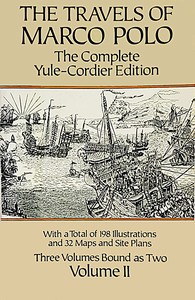
There are moments when reading Gage's careful notes on Poconchi grammar that I feel the same quiet awe I once felt with The Travels of Marco Polo — Volume 2 — Text and Context—both men, centuries apart, simply recording what they saw before the world forgot it existed. It makes me wonder how many small languages and lost roadways they carried home in their memories.
There are no reviews for this eBook.
There are no comments for this eBook.
Reader reflection
Your personal reading reflection
Build a private reading journal entry for this title.
Your progress
0
/
10
2
How did the book work for you overall?
3
Is this a title you would suggest to others?
4
What was the reading difficulty like?
5
How clear did the writing feel?
6
Did the book meet your expectations?
7
Is this a title worth rereading?
8
Did you gain anything practical from the text?
9
In one sentence, what did you learn?
10