1

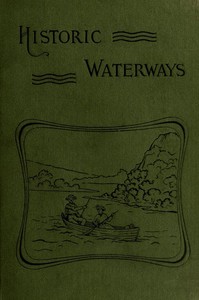
Historic Waterways—Six Hundred Miles of Canoeing Down the Rock, Fox, and Wisconsin Rivers — Background and Themes
(0 User reviews)
2112
Project Gutenberg
2012
Not confirmed
Wisconsin -- Description and travel; Canoes and canoeing -- Wisconsin; Rock River (Wis. and Ill.); Fox River (Wis. and Ill.); Wisconsin River (Wis.)
Readers of public-domain and historical texts
Project Gutenberg digital edition
en
Edition facts
Words
60,763
Reading time
265 min
Text sections
9
The source record for Historic Waterways—Six Hundred Miles of Canoeing Down the Rock, Fox, and Wisconsin Rivers — Background and Themes measures this digital text at 60,763 words, 4 hr 25 min estimated reading time, and 9 detected text sections.
The text analysis averages about 25.8 words per sentence, while the detected sections provide another way to judge how the source is divided.
Project Gutenberg metadata also associates the work with “Wisconsin -- Description and travel,” connecting these edition facts with the source record’s subject description.
Source:
Project Gutenberg record #38556
Thwaites recounts 600 miles of canoeing on Wisconsin and Illinois rivers in 1887, blending travel narrative with observations on river towns, steamboat traffic, and local economies. The account is structured by the journey's stages, with recurring attention to the contrast between natural scenery and decaying settlements.
Read the complete public-domain text at its original source.
Read on Project GutenbergThe narrative moves with the current, each bend of the river bringing a new scene. Thwaites structures his account as a series of daily stages, from the Rock to the Fox and Wisconsin Rivers, punctuated by portages and encounters with steamboats. The prose itself drifts between lyrical descriptions of sunset glows and terns perched on snags, and matter-of-fact reports on the economics of river towns—a sawmill boarded up, a hotel with only the schoolmaster as guest. This alternation between the picturesque and the practical gives the book its distinctive rhythm.
The River as a Living Archive
Thwaites treats the waterways as repositories of history, but his evidence is not drawn from books alone. At Lake Puckawa, he notes that Marquette occupies the site of an Indian fur-trading camp, a fact he mentions only in passing. More telling are the physical remnants: two deserted saw-mills, abandoned warehouses, a rotting sidewalk. The landscape itself becomes a document of economic decline. The author does not moralize; he simply records that the village is “dying, if not already dead,” and that the passage of a law against spring shooting has cut off half its business. The reader is left to connect these details to the larger story of industrial change in the Upper Midwest.
Steamboats and Canoes: Two Scales of Navigation
The contrast between the author’s canoe and the steamboats he encounters is a recurring structural device. When the T. S. Chittenden looms above them, Thwaites compares it to “a whale overlooking a minnow.” The steamboats are erratic, their schedules uncertain; the “Chittenden” and “Ellen Hardy” are the only boats on the upper Fox, making a through trip perhaps once a week. The canoe, by contrast, is nimble, able to drift through reed swamps and stop for supper on the water. This juxtaposition underscores a theme of scale: the industrial river versus the intimate one. Thwaites does not argue for one over the other, but the reader senses that the canoe’s pace allows for observations the steamboat would miss.
The Doctor as Character and Lens
Thwaites’s messmate, referred to only as “the Doctor,” serves as a foil and a source of color. He is an enthusiast of his profession, capable of describing a Vienna hospital patient while holding cake and lemonade. He diagnoses Lake Puckawa as a fine field for fly-fishing and grows so animated over nesting ducks that Thwaites must restrain him from breaching the reeds. The Doctor’s presence allows Thwaites to shift tone: from the Doctor’s medical anecdotes to his practical skills—he deftly spreads a canvas for a supper cloth and prepares lemonade with expertise. Through these details, the narrative gains a human counterpoint to the landscape, and the journey becomes a shared experience rather than a solitary survey.
Stillness and Decay in River Towns
Thwaites repeatedly pauses to assess the economic health of the settlements he passes. Marquette is described with precision: three hundred inhabitants, a pretty clubhouse used twice a year by Chicago duck hunters, and a hotel where the schoolmaster has been the only guest in six weeks. The author does not invent a cause for this decline, but he notes the physical evidence—boarded storefronts, a rotten sidewalk, the grass-grown street used as a footpath. The tone is observational, not elegiac. Yet the accumulation of such details creates a portrait of a region in transition, where the river once sustained commerce but now carries only the occasional canoeist. The stillness is not romanticized; it is simply recorded.
Thwaites’s account rewards readers who attend to small details: the way a steamboat’s paddle is called a “wheelbarrow paddle,” the precise length of Lake Puckawa, the fact that the Doctor’s lemonade is a recurring motif. The book is best read as a series of vignettes rather than a continuous narrative, each stop along the river offering a fresh combination of natural observation and human encounter. The author’s preface promises a “simple, truthful narrative,” and he delivers exactly that—no more, no less.
Reading about those decaying river towns in Thwaites’s canoe journey, I felt that ache of witnessing a place mid-fade, still bustling but somehow already ghostly. It reminded me of the strange intimacy of Memoirs of the Lady Hester Stanhope, as related by herself in conversations with her physician, vol. 1 (of 3) — Story, Setting & Ideas, where a fierce life is captured just as its certainties erode. Both are quiet elegies for worlds that didn’t know they were ending.
There are no reviews for this eBook.
There are no comments for this eBook.
Reader reflection
What was your reading experience?
Capture what you thought, learned, and would like to remember.
Your progress
0
/
10
2
How much did you enjoy the reading experience?
3
Would you pass this book on to a friend?
4
How demanding did the text feel?
5
Was the book what you thought it would be?
6
How strongly did the book affect you emotionally?
7
Did it raise ideas you would like to talk about?
8
How clearly were the main ideas presented?
9
Which lesson or insight stayed with you?
10