1

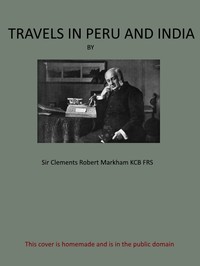
Travels in Peru and India While Superintending the Collection of Chinchona Plants and Seeds in South America, and Their Introduction into India. — Themes and Context
(0 User reviews)
346
Project Gutenberg
2017
Not confirmed
India -- Description and travel; Peru -- Description and travel; Cinchona
Readers of public-domain and historical texts
Project Gutenberg digital edition
en
Edition facts
Words
193,198
Reading time
840 min
Text sections
28
The source record for Travels in Peru and India While Superintending the Collection of Chinchona Plants and Seeds in South America, and Their Introduction into India. — Themes and Context measures this digital text at 193,198 words, 14 hr estimated reading time, and 28 detected text sections.
The text analysis averages about 23.6 words per sentence, while the detected sections provide another way to judge how the source is divided.
Project Gutenberg metadata also associates the work with “India -- Description and travel,” connecting these edition facts with the source record’s subject description.
Source:
Project Gutenberg record #55593
Markham's 1862 account of collecting cinchona plants in Peru and India blends travel narrative with botanical detail, using precise elevation data and agent reports to document the introduction of quinine-yielding trees to British India.
Read the complete public-domain text at its original source.
Read on Project GutenbergMarkham opens his preface by stating that the introduction of quinine-yielding Chinchona-trees into India had engaged the Indian Government for years before he was tasked with superintending the collection in 1859. The narrative that follows is not a leisurely travelogue but a focused operational report, interleaving botanical descriptions with logistical decisions. Elevations are given in feet, distances in miles, and the success of each agent is measured in months and species collected. The voice is that of a civil servant and geographer: precise, evaluative, and concerned with replicable results.
A Narrative of Procedure, Not Adventure
Markham structures his account around the sequence of collection efforts rather than dramatic incident. He describes his own exploration of the Caravaya province, then turns to agents like Mr. Pritchett, who went directly from Lima to the Huanuco region and completed his collection in just over three months. The prose emphasizes efficiency: “Time was a great object.” Markham notes that Pritchett’s prior knowledge of the region, people, and language saved time and money—a contrast to the Dutch agent who wandered into worthless species. The narrative pace accelerates when summarizing successful missions and slows for detailed elevation calculations, as when he estimates the Cocheros mountain summit at 6,000 feet by combining multiple sources. This procedural focus gives the work the texture of an official dispatch rather than a personal memoir.
Voice and the Authority of Measurement
Markham’s narrative voice is that of a coordinator who trusts numbers over impressions. He corrects Pritchett’s elevation estimate of Cocheros (4,000 feet) by triangulating from Huanuco’s known height (6,300 feet), the Carpis summit (8,000 feet), and the descent into the Casapi valley. He writes, “I think there can be no doubt that the elevation of that mountain is much greater than Mr. Pritchett supposes.” The tone is collegial but firm. When describing the region of C. nitida and C. micrantha, he assigns precise altitudinal bands (6,000–7,000 feet and 4,000–5,000 feet respectively), using the phrase “we shall not, therefore, be very far from the truth.” This cautious certainty pervades the text. Even when recounting the abandonment of Spruce’s plan to send Dr. Taylor, Markham reports it as a logistical gap to be filled, not a failure to lament.
Pacing Through Agent Reports and Botanical Detail
The narrative shifts pace between Markham’s own travels and the condensed reports of his agents. The account of Mr. Cross’s journey in 1861 is brisk: he left Guayaquil on September 17 in an open boat, landed at Santa Rosa, and reached Loxa on the 27th, passing through “dense swampy forests” and “dangerous precipitous ridges.” One mule slipped and was “dashed to pieces.” Yet Markham does not dwell on the drama; he immediately returns to Cross’s qualifications as a gardener and his trustworthiness. Similarly, botanical descriptions are woven into the travel narrative without breaking stride. When discussing the Huanuco region, he cites Poeppig’s travels and modern accounts, then moves on. The effect is a steady, purposeful rhythm: each paragraph advances the mission, whether by correcting an elevation, praising an agent, or noting a species’ range.
Readers should approach this work as a hybrid document: part travel narrative, part botanical report, part colonial administrative record. Markham’s voice is that of a project manager who values precision and efficiency. The frequent elevation data and agent assessments are not digressions but the core evidence of a successful introduction. Pay attention to how he weighs conflicting sources and how the pace quickens when summarizing completed tasks—this is a book less about the landscape than about the logistics of moving plants across continents.
Reading Markham’s precise elevation notes for the cinchona trees, I felt that same quiet patience one has when measuring a journey by the water’s bend, not the miles. His careful records reminded me of an old canoe trip documented in Historic Waterways—Six Hundred Miles of Canoeing Down the Rock, Fox, and Wisconsin Rivers — Background and Themes, where each portage was just another kind of planting, a slow trust in the current’s intention.
There are no reviews for this eBook.
There are no comments for this eBook.
Reader reflection
What did you think of this book?
Answer a few questions and save a private reflection on this device.
Your progress
0
/
10
2
How much did you enjoy the reading experience?
3
Would you encourage someone else to read it?
4
How demanding did the text feel?
5
How closely did the book connect with your experience?
6
Which aspect of the book did you value most?
7
What did you think about the pace?
8
How well did it match your expectations?
9
What did this book teach you most?
10