1

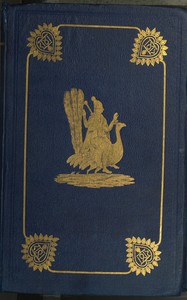
Wanderings of a pilgrim in search of the picturesque, Volume 2 (of 2) — A Closer Reading
(0 User reviews)
2304
Project Gutenberg
2024
Not confirmed
India -- Description and travel; India -- Social life and customs -- 19th century; Parlby, Fanny Parkes, 1794-1875 -- Diaries; Parlby, Fanny Parkes, 1794-1875 -- Travel -- India; Colonial administrators' spouses -- India -- Diaries
Readers of public-domain and historical texts
Project Gutenberg digital edition
en
Edition facts
Words
202,653
Reading time
882 min
Text sections
41
Before opening Wanderings of a pilgrim in search of the picturesque, Volume 2 (of 2) — A Closer Reading, the edition data offers a quick orientation: 202,653 words, 14 hr 42 min estimated reading time, and 41 detected text sections.
The text analysis averages about 25.3 words per sentence, while the detected sections provide another way to judge how the source is divided.
Project Gutenberg metadata also associates the work with “India -- Description and travel,” connecting these edition facts with the source record’s subject description.
Source:
Project Gutenberg record #74043
Fanny Parkes Parlby's second volume of Indian travel diaries blends vivid descriptions of Himalayan pilgrimages, Mahratta camp life, and zenana visits with sharp observations on colonial society and local customs, revealing a restless eye for the picturesque and the peculiar.
Read the complete public-domain text at its original source.
Read on Project GutenbergFanny Parkes Parlby opens this second volume with a characteristic blend of curiosity and self-deprecation, noting that she has “launched my boat” into the unknown. The narrative moves from the Mahratta camp at Fathīghar to the Himalayan shrines of Gangoutrī, shifting between intimate zenana visits and expansive landscape descriptions. Parlby’s voice is that of a seasoned traveler who records both the grandeur of snow peaks and the absurdity of an English side-saddle in a Mahratta camp.
Her observations are precise: she notes the thickness of the snow-bed at Gangoutrī as “little less than three hundred feet of solid frozen snow,” and recounts a Brahmin’s explanation that icicles are “Mahádéva’s hair.” Such details reveal a writer attentive to local interpretations as well as physical facts.
Zenana Encounters and Colonial Friction
Parlby’s access to zenanas—the women’s quarters—sets her account apart from male travel writers. She records visits to the ex-queen Bāiza Bā’ī and the six wives of Appa Sāhib, noting dress, customs, and the “absurdity of a side-saddle” from a Mahratta perspective. Her descriptions are not merely ethnographic; they reveal tensions between British and Indian norms. When the Bā’ī visits Parlby’s pinnace, the scene becomes a negotiation of space and status. The author also notes the “oppression of the laws with respect to widows,” a pointed observation that links personal observation to social critique.
These passages are dense with material detail: the recipe for “Hooqŭ Cakes,” the use of “tiger-claw charms,” and the classification of “lucky and unlucky marks on horses.” Parlby’s eye for the concrete gives her account a documentary texture, while her willingness to record both the exotic and the mundane avoids romanticization.
The Himalayan Pilgrimage: Landscape and Belief
The latter part of the volume turns to the sacred geography of the Himalayas. Parlby describes the temples of Kedarnāth and Gangoutrī, the latter “but little frequented” despite its supposed power to redeem pilgrims from “many troubles in this world.” She quotes Captain J. A. Hodgson’s account of the Ganges issuing “from under a very low arch at the foot of the grand snow-bed,” a passage that blends scientific observation with awe. The “awful silence” and “thundering peals of falling avalanches” create a landscape that is both sublime and inhospitable.
Parlby’s own voice recedes here, but her selection of material—including the Brahmin’s interpretation of icicles as Shiva’s hair—shows her interest in how local beliefs animate the physical world. The contrast between the crowded fairs at Hurdwar and the desolate snows of Gangoutrī underscores the range of pilgrimage experience in nineteenth-century India.
Narrative Structure and the Traveler’s Gaze
The volume’s structure is episodic, moving from camp to city to mountain shrine without a unifying plot. Parlby’s diary entries are dated but not always consecutive; the effect is of a collection of scenes rather than a continuous journey. This fragmentation mirrors the experience of travel itself, where each new location demands fresh attention. The author’s recurring interest in the “picturesque” is evident in her descriptions of ruins, processions, and natural wonders, but she also records less aesthetic details: the “vicious beast” of a camel, the terror of a squall on the Ganges.
Parlby’s position as a colonial administrator’s wife gives her access to both British and Indian spaces, but she remains an outsider in both. Her narrative is marked by a tension between participation and observation, a pattern that runs through the volume and gives it a distinctive, restless energy.
Readers approaching this volume should expect a meandering, detail-rich account that resists easy summary. Parlby’s strength lies in her eye for the specific—the exact height of a peak, the texture of a fabric, the phrasing of a local legend. The book rewards those who read for texture rather than plot, and who appreciate the way a traveler’s diary can capture the friction between cultures without resolving it.
There's something about Fanny Parkes Parlby's restless eye—the way she notices everything, the pilgrim paths and the odd corners of colonial life—that stays with me long after I close the book. That same quiet ache for the strange and beautiful surfaces in Travels in Peru and India While Superintending the Collection of Chinchona Plants and Seeds in South America, and Their Introduction into India. — Themes and Context, where the landscape feels just as alive, just as haunting.
There are no reviews for this eBook.
There are no comments for this eBook.
Reader reflection
Your personal reading reflection
Build a private reading journal entry for this title.
Your progress
0
/
10
2
How much did you enjoy the reading experience?
3
Would you recommend this book to another reader?
4
How demanding did the text feel?
5
Did this book create an emotional response?
6
How would you rate its originality?
7
Which aspect of the book did you value most?
8
How clearly were the main ideas presented?
9
Which lesson or insight stayed with you?
10