About 73 minutes
Mr. Punch on Tour: The Humour of Travel at Home and Abroad — Text and Context
Geography
16,741 recorded words. 0 minutes difference from this book's estimate.
View Gutenberg source #36177
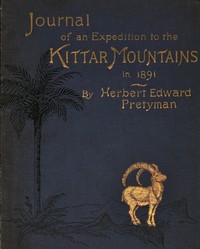
This digital edition of Journal of Herbert Edward Pretyman written during his expedition to the Kittar Mountains, between Kenneh (on the Nile) and the Red Sea, 1891 — A Closer Reading is described by source-level measurements including 16,571 words, 1 hr 13 min estimated reading time, and 3 detected text sections.
The text analysis averages about 18.2 words per sentence, while the detected sections provide another way to judge how the source is divided.
Project Gutenberg metadata also associates the work with “Egypt -- Description and travel,” connecting these edition facts with the source record’s subject description.
Explore this collection
These alternatives are selected using recorded categories and estimated reading time.
About 73 minutes
Geography
16,741 recorded words. 0 minutes difference from this book's estimate.
View Gutenberg source #36177About 80 minutes
Geography
18,219 recorded words. 7 minutes difference from this book's estimate.
View Gutenberg source #46208About 64 minutes
Geography
14,517 recorded words. 9 minutes difference from this book's estimate.
View Gutenberg source #49588Search stored excerpts and compare books → Choose by your preferences →
Choices use stored catalog measurements. Estimates vary with reading speed. A shared category is a catalog label, not a claim that two books have the same argument or literary quality.
Search reads excerpt text stored with this catalog and links to its associated Gutenberg record. The connection is stored in the site database; this tool does not recheck that every excerpt is word-for-word identical to that external record. Excerpt search does not cover every chapter and does not verify historical publication dates.
Catalog snapshot checked: 2026-09-25. Coverage: 95 public books, 95 available source excerpts.
Read the complete public-domain text at its original source.
Read on Project GutenbergHerbert Edward Pretyman's journal, written during his 1891 expedition to the Kittar Mountains, is a record of daily life in a harsh landscape. The text, annotated by Ernest Ayscoghe Floyer, is notable for its plain, unadorned prose. Pretyman describes events with a matter-of-fact tone: a tent blown down twice by a 'devil' (a dust devil), a pet goat killed for food, and a soldier falling asleep on his camel and rolling off 'much to everybody's amusement.' These details reveal a writer more concerned with accurate reporting than with literary flourish.
The journal's structure—dated entries with brief, concrete observations—reflects its origin as a private record, never intended for publication. Pretyman's father, Frederic, notes in the preface that he made 'no attempt to alter or revise it,' preserving the raw immediacy of the original. This editorial note examines the authorial choices in diction, dialogue, and description that shape the text.
Pretyman's diction is consistently precise and understated. He describes shooting an ibex: 'The shot hit him just right fortunately, and he fell stone dead right to the bottom of the precipice.' The word 'fortunately' is typical—luck is acknowledged without drama. When a tent is blown down, he notes, 'Luckily the bamboo ridge pole did not break, so we put up our home again; but presently another devil came, and blew it down a second time.' The repetition of 'devil' for dust devil is a specific, colloquial term that grounds the description in the local environment.
His vocabulary for landscape is similarly exact: 'low cinder mountains,' 'deep gorge,' 'precipice.' He distinguishes between types of water sources—'pools,' 'wells,' 'dirty water'—and notes their capacity: 'enough to water one hundred camels.' This precision reflects a military officer's eye for detail and a practical concern with survival.
Dialogue is rare in the journal, but reported speech appears in key moments. Pretyman writes that 'our men had reported some partridges (probably sandgrouse) as having been there in the morning.' The parenthetical correction shows his own knowledge overriding local report. When describing a well, he notes it is 'the worst we have so far seen; so dirty, in fact, that it has all to be boiled and filtered before we can use it.' The phrase 'in fact' introduces a factual clarification, not a narrative embellishment.
The only direct speech is implied in the preface, where Frederic Pretyman quotes his son's likely thought: 'The last thought, I feel sure, that would have ever crossed his mind was that this simple record... would ever see the light.' This framing emphasizes the journal's unpolished, private nature.
Pretyman's descriptions blend environmental observation with daily routine. He notes temperature: 'The thermometer fell to “freezing” during the night.' He records wind: 'The north wind was like ice all day, and the fog of this morning never quite cleared off.' These details are woven into accounts of hunting, camp chores, and food shortages. For instance, 'We had to kill our pet goat to-day for food, as we have no meat and our flour is running short. We make our bread now—half flour and half potatoes.'
The journal also includes moments of aesthetic appreciation: 'Lovely sunset this evening.' But such remarks are brief, never elaborated. The overall effect is a cumulative portrait of a harsh environment where beauty is noted but not dwelled upon.
The journal's structure—dated entries of varying length—creates a rhythm of expectation. Each entry typically begins with weather, then moves to hunting or camp activities. Pretyman's narrative voice is consistent: first-person, past tense, with occasional shifts to present tense for immediacy ('We are getting short of meat'). He uses passive constructions sparingly, preferring active verbs: 'I stayed in camp and busied myself preparing the skin, head, and feet, &c., of yesterday’s ibex.'
The inclusion of photographs, listed in the front matter, suggests a visual complement to the text. The journal's private origin is evident in its lack of explanatory context; readers must infer the expedition's purpose from the preface and catalog metadata. This restraint is a deliberate authorial choice, preserving the document's authenticity.
Pretyman's journal offers a window into the daily realities of a late-Victorian explorer. Its value lies not in dramatic narrative but in the accumulation of small, precise details: the temperature at dawn, the taste of bread made with half potatoes, the sight of a camel driver tumbling off his mount. Readers should approach the text as a primary source, attending to what Pretyman chooses to record and what he omits. The annotations by Floyer, though not excerpted here, may provide additional context. This is a document of survival, not adventure, and its understated tone is its greatest strength.
There’s something about how Pretyman notes the quiet details—the dust, the camel’s stumble—that stayed with me long after. I felt that same lingering warmth reading Wanderings of a pilgrim in search of the picturesque, Volume 2 (of 2) — A Closer Reading. It holds that same unhurried, almost tender attention to what most would overlook.
Answer a few questions and save a private reflection on this device.